Factors influencing student participation in community-based learning in the Department of Public Health: a case study of Kisii University, Kenya
Faith Moragwa Ayienda, Anastasiah Kimeu, Tabitha Rangara
Corresponding author: Faith Moragwa Ayienda, Department of Health Systems Management, School of Public Health, Amref International University, Nairobi, Kenya 
Received: 18 Apr 2026 - Accepted: 23 Jun 2026 - Published: 03 Jul 2026
Domain: Health education
Keywords: Students, public health, health education, faculty, curriculum
Funding: This work received no specific grant from any funding agency in the public, commercial, or not-for-profit sectors.
©Faith Moragwa Ayienda et al. Primary Health Care Practice Journal (ISSN: 3105-7624). This is an Open Access article distributed under the terms of the Creative Commons Attribution International 4.0 License (https://creativecommons.org/licenses/by/4.0/), which permits unrestricted use, distribution, and reproduction in any medium, provided the original work is properly cited.
Cite this article: Faith Moragwa Ayienda et al. Factors influencing student participation in community-based learning in the Department of Public Health: a case study of Kisii University, Kenya. Primary Health Care Practice Journal. 2026;5:5. [doi: 10.11604/PHCP.2026.5.5.52816]
Available online at: https://www.phcp-journal.org//content/article/5/5/full
Research 

Factors influencing student participation in community-based learning in the Department of Public Health: a case study of Kisii University, Kenya
Factors influencing student participation in community-based learning in the Department of Public Health: a case study of Kisii University, Kenya
 Faith Moragwa Ayienda1,&, Anastasiah Kimeu1, Tabitha Rangara2
&Corresponding author
Introduction: community-based learning (CBL) enables students to apply classroom knowledge to real-world health challenges. Despite CBL implementation at Kisii University, factors influencing student participation remain underexplored. This study aimed to identify institutional factors, faculty preparedness, and student perceptions influencing CBL participation to inform program sustainability.
Methods: a descriptive cross-sectional design was used. The sample comprised 96 third-year public health students (96% response rate) and 8 purposively selected faculty key informants. Quantitative data were collected via structured questionnaires, analyzed through descriptive statistics, and presented in tables. Qualitative data were collected through key informant interviews and subjected to thematic analysis. Informed consent was obtained from all participants.
Results: coordination of CBL activities by the Department of Public Health was rated positively (mean= 4.1, standard deviation=0.8), with 78% agreement. However, transport support for community site visits was the least endorsed institutional factor (mean= 2.5, standard deviation=1.2), with 54% of students reporting inadequate logistical support. Qualitative findings highlighted resource constraints, bureaucratic barriers, and ineffective communication. While students perceived CBL as effective for applying theoretical knowledge (mean = 4.4; 86% agreement), participation was hindered by practical barriers such as language differences and personal financial costs. Faculty demonstrated high enthusiasm (mean= 4.2, standard deviation=0.9; 84% agreement), but gaps in technical support, particularly timely feedback (mean= 3.2, standard deviation=1.1), were noted, with 31.3% dissatisfaction. Faculty attributed these gaps to limited training and an unpaid workload.
Conclusion: inadequate institutional resources and inconsistent faculty support structures are key barriers to CBL participation at Kisii University. Establishing a dedicated CBL office and providing transport and financial support may enhance student engagement and program effectiveness.

Community-based learning (CBL) is a hands-on pedagogical model where students are involved in guided experiences where they respond to actual needs of the community and therefore connect the theory taught with practice [1]. Community-based learning (CBL) is useful in the context of public health education since students train on critical skills such as problem-solving, communication, and ethical reasoning, contributing to the growth of community health [2,3]. Community-based learning (CBL) is one of the fundamental approaches to strengthening the public health workforce competences and a World Health Organization approach for addressing population health demands [4,5].
Regionally, institutions like Makerere University (Uganda) and the University of Cape Town (South Africa) have introduced CBL in public health and medical education with documented improvements in student professional competencies and community capacity building [4,6]. In Kenya, institutions such as Moi University, Kenyatta University, Jomo Kenyatta University of Agriculture and Technology, and the Kenya Medical Training College actively utilize CBL models [7-9]. This experiential approach aligns with a broader regional landscape of diverse experiential frameworks designed to bridge classroom learning and community health, such as the "learning by living" model implemented at the Kamuzu University of Health Sciences (KUHeS) in Malawi. The Department of Public Health at Kisii University utilizes a CBL framework to conduct community-based activities, including environmental protection, hygiene education, and mental health awareness [10].
Although Kisii University has integrated community-based learning (CBL) into the public health curriculum as a mandatory educational component, the effectiveness of its implementation remains largely undocumented. Successful implementation of community-based learning requires adequate institutional support, faculty preparedness, logistical resources, and strong community partnerships. While the university has established structures to support CBL activities, limited empirical evidence exists regarding how these factors influence student participation and learning experiences within the Kisii University context. Consequently, there remains limited understanding of the institutional, faculty-related, and student-related factors that may facilitate or hinder effective participation in community-based learning. Addressing this knowledge gap is important for informing strategies that can strengthen programme implementation and enhance the educational benefits of community-based learning. Therefore, this study sought to determine the factors influencing student participation in CBL in the Department of Public Health at Kisii University, Kenya, specifically focusing on institutional factors, the level of faculty preparedness, and students´ perceptions towards CBL.

Study design: the mixed methods descriptive cross-sectional design was used. This design could quantitatively evaluate the availability of resources, structures of supervision, and infrastructure, as well as qualitatively explore experiences and perceptions.
Study setting: the study was conducted at Kisii University, a public university in Kisii County, Kenya. The Department of Public Health provides a BSc degree in public health, where CBL is a mandatory course in the third year.
Participants and sampling: the target population comprised 363 third-year undergraduate public health students. An official student enrollment roster maintained by the department served as the definitive sampling frame, ensuring that every eligible student had an equal and independent probability of selection. To achieve this, unique numerical identifiers were assigned to each student on the roster. Using an Excel-based random number generator, 100 unique identifiers were drawn to constitute the survey sample. The survey link was subsequently distributed privately via WhatsApp and email directly to the selected individuals to preserve sampling integrity. For the qualitative component, a sample of eight faculty members directly involved in CBL facilitation (lecturers, field coordinators, and part-time lecturers) was selected via purposive sampling to serve as key informants.
Sample size: the sample size for this study was determined using Fisher´s formula [11].
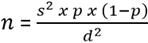
Where n = target sample size (<10,000), s = standard normal deviation for the specified confidence level, p = estimated proportion in the population with the characteristics being assessed, and d = established level of statistical significance (0.05). For n ≥ 10000 n =138.2976 = 138 students.
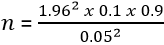
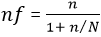
Where nf = target sample size (> 10000), n = target sample size (> 10000), N = estimated population size. In the calculation, utilize S = 1.96, P = 10%, N = 363. Therefore, for N ≤ 10000:

Data collection instruments: quantitative data were collected using a structured questionnaire administered through secure online Google Forms. The instrument consisted of both closed-ended and open-ended items. Closed-ended questions measured institutional factors, faculty preparedness, and student perceptions using a five-point Likert scale ranging from 1 (strongly disagree) to 5 (strongly agree). Open-ended questions were included to allow respondents to provide additional explanations regarding barriers, experiences, and suggestions for improving community-based learning. Qualitative data were collected through face-to-face key informant interviews using a semi-structured interview guide. The guide explored themes related to institutional support, faculty preparedness, community partnerships, supervision practices, and challenges affecting the implementation of community-based learning.
Validity and reliability: the questionnaire was pilot-tested among five public health students at Amref International University to refine clarity and eliminate ambiguity. Trustworthiness in qualitative data was established through member checking and peer debriefing. Regarding data security, all electronic information collected through the Google Forms platform was stored directly within a cloud environment restricted behind password-controlled devices accessible exclusively to the primary research team. Data presentation was restricted to aggregated formats to ensure complete participant anonymity.
Data collection procedures: the questionnaires were online and self-administered during a period of one month. Face-to-face interviews were used to conduct key informant interviews, which were documented in a notebook. Data collected through questionnaires was saved in the Google Cloud space.
Data analysis
Quantitative data analysis: quantitative data were analyzed using Microsoft Excel. Descriptive statistics, including frequencies, percentages, means, and standard deviations, were used to summarise participant responses. Responses were measured on a five-point Likert scale ranging from 1 (strongly disagree) to 5 (strongly agree). Although Likert-scale responses are ordinal in nature, aggregated responses were treated as approximately continuous variables for descriptive analysis, which is a commonly accepted approach in educational research. Mean scores and standard deviations were therefore used to describe the central tendency and variation of responses.
Mean scores were interpreted as follows:1.00-1.80 = strongly disagree; 1.81-2.60 = disagree; 2.61-3.40 = neutral; 3.41-4.20 = agree; 4.21-5.00 = strongly agree. The findings were presented using tables and narrative descriptions to provide an in-depth analysis of the findings and easily interpret the findings.
Qualitative data analysis: qualitative data obtained from key informant interviews and open-ended questionnaires were organised into general themes which emerged from the responses given by the respondents. The researcher also scrutinised the data critically and made labels and classified the various responses in relation to their suitability to the research objectives. This was through the adoption of spreadsheet software, i.e., Microsoft Excel, to organise and track the frequency of appearance of each theme. They were presented in thematic descriptions including quotations where necessary, so that the findings would be understandable and emphasised.
Ethical considerations: ethical approval to conduct the study was obtained from the Amref Ethics and Scientific Review Committee (ESRC), under approval number ESRC P2020/2025, as well as from the National Commission for Science, Technology, and Innovation (NACOSTI). The researcher obtained permission from Kisii University ISERC to collect data via an online structured questionnaire for the students and one-on-one interviews with the key informants. The study's purpose, goals, and procedures were clearly and respectfully explained to all potential participants, who were assured that participation was entirely voluntary and without consequences for non-participation. Informed written consent was obtained from those who agreed to take part after all questions were addressed. The study adhered to ethical principles of autonomy, beneficence, non-maleficence, and justice.
This study at Kisii University explored the factors influencing student participation in community-based learning.
Demographic characteristics: as illustrated in Table 1, of the 100 students who were invited to participate in the study, 96 completed and returned the questionnaire, resulting in a response rate of 96%. The majority of respondents were male (54.2%), while females accounted for 43.8%. A small proportion (2.1%) preferred not to disclose their gender. Most respondents were aged between 21 and 23 years (71.9%), indicating that the study population largely comprised students at the expected stage of undergraduate public health training. Regarding academic level, most participants were third-year students (92.7%), which aligns with the curricular placement of community-based learning within the Bachelor of Science in Public Health programme. Most respondents (78.1%) reported previous participation in community-based learning activities, while 21.9% reported no prior participation despite being eligible for the programme. Responses from open-ended questions suggested that financial constraints, transport difficulties, scheduling challenges, and other logistical barriers may have contributed to non-participation among some students.
In addition, 60.4% of respondents resided off-campus during community-based learning activities, compared with 39.6% who resided within the university campus. This finding is important because residence location may influence transport costs and accessibility to community placement sites.
Institutional factors influencing CBL: the quantitative findings revealed that departmental coordination received the highest rating among the institutional factors (M = 4.1, SD = 0.8), with 78% of respondents agreeing or strongly agreeing that the Department of Public Health effectively coordinated community-based learning activities (Table 2). This finding suggests that students generally perceived departmental leadership and organisational support positively. Similarly, supervision during community-based learning placements received a relatively favourable rating (M = 3.8, SD = 1.0), indicating moderate satisfaction with supervision practices. However, transport support received the lowest rating among all institutional factors (M = 2.5, SD = 1.2), with more than half of the respondents (54%) disagreeing or strongly disagreeing that adequate transport support was provided. The high standard deviation indicates variation in experiences among students, although dissatisfaction was dominant. Faculty interviews revealed that transport challenges were largely attributed to inadequate funding, limited availability of university vehicles, and administrative procedures required before field activities could take place. These findings suggest that while departmental commitment exists, institutional resource limitations continue to constrain student participation. Partnerships with community organisations received a moderate rating (M = 3.2, SD = 1.1). Faculty interviews indicated that many community partnerships were maintained through personal relationships rather than formal institutional agreements. The absence of structured memoranda of understanding may have contributed to uncertainty among students regarding the strength and sustainability of these partnerships. This may explain why partnerships did not receive ratings comparable to departmental coordination.
Communication between faculty and students regarding community-based learning expectations also received moderate ratings (M = 3.4, SD = 1.1). Qualitative responses highlighted inconsistencies in communication regarding schedules, supervision arrangements, and placement expectations. These findings indicate a need for more structured communication mechanisms to support community-based learning implementation. Four themes were identified through qualitative research using the faculty interviews (Table 3). The lack of resources was a widespread issue: one senior lecturer (informant 1) said, “CBL is a policy on paper, not in the wallet; there is no dedicated budget line on community outreach”. The lack of basic field equipment was another thing that was reported. Bureaucratic rigidity slowed down prompt operations: “getting a university bus would take months to get paperwork done instead of signing an MOU. We have informal MOUs; they are handled by personal acquaintance, not by an institutional office,” said informant 2. As a result, there were communication gaps, and there was confusion in terms of schedules and expectations, with students complaining that there were no clear instructions.
Faculty preparedness in facilitating CBL: the ratings on quantitative measures revealed that faculty enthusiasm received the highest rating (mean=4.2, SD=0.9; 84% agreed/strongly agreed) (Table 2). Nonetheless, lower scores were obtained with orientation (mean=3.5), checking frequently on the field (mean=3.4), and prompt feedback (mean=3.2, SD=1.1; 31% disagreed). Qualitative responses from faculty interviews complemented quantitative findings by explaining that the majority of the faculty had not been formally trained on CBL facilitation (Table 3). One of the lecturers (informant 3) confessed, “I was not formally trained on facilitating CBL. I am only doing as my mentors did”. Another lecturer (informant 7) remembered, “we did have another workshop last year, but it was too theoretical. We require real-life training of trainers.” The issue of workload was a key issue: CBL supervision was not awarded workload points. Informant 5 remarked that the hours spent in a village square in the sun were not counted as workload credit, even though faculty members were enthusiastic about the importance of CBL. Informant 2 added that, “CBL is where they learn about disease surveillance; the smell of a stagnant drain, you can never teach in a lecture hall.” Suggestions were the establishment of a CBL office, formal training, and community incentives.
Student perceptions towards CBL: quantitative findings revealed that students were overwhelmingly positive regarding the use of CBL as an effective method of putting theoretical knowledge into practice (mean = 4.4, SD=0.7; 86% agree/strongly agree) (Table 2). Other high scores were enjoyment (mean = 4.1) and skill development (mean = 4.0). Community receptiveness, however, received a lower rating (mean = 3.3, SD=1.1; 25% neutral, 15% disagreed), indicating mixed perceptions regarding the willingness of community members to support CBL activities. Open-ended responses further explained moderate ratings for community receptiveness by highlighting language barriers, cultural differences, financial challenges, and inconsistent community participation. One of the students wrote, “language barrier - some of the community members do not speak English or Kiswahili, and I am not familiar with their native language.” Transport difficulties, financial factors, and bad infrastructure such as muddy roads were mentioned as well. According to some students, community members required tokens or were not willing to participate. The proposed changes included the offer of transportation, better communication, and more realistic implementation of CBL into the curriculum, as proposed by students. These qualitative findings helped explain variations observed in quantitative responses.
In this research, the authors explored the factors that influence student participation in community-based learning (CBL) in Kisii University, Kenya. The results indicate that there is a longstanding policy-practice gap: CBL is officially approved and welcomed by students and faculty, but there are limited resources, informal collaborations, inadequate faculty development, and logistical issues. The findings build upon the existing body of research in showing how institutional, faculty, and student variables interact in a low-resource public health education situation.
Institutional factors: resource-free coordination: departmental coordination was rated positively by 78% of students (mean = 4.1, SD=0.8), but transport support (mean = 2.5, SD=1.2) and dedicated budgets were seriously lacking. More than half, 54% of students disagreed or strongly disagreed that transport is well supported. This contradiction is consistent with Azlan et al. and Stoecker et al. [12,13], who observed that in many cases, institutional rhetoric surpasses the allocation of resources, which creates unsustainable CBL. In Kisii, transport or field equipment cannot be assured even by committed departmental leadership since it lacks a specific budget line.
Civic relationships were informal, with partnerships with community organisations being supported by personal relationships and not a formal MOU. One of the professors said, “we have an informal MOU; we do that through personal acquaintance”. This confirms Bringle et al. [14]: in the absence of a centralised CBL office and official agreements, the activities are shallow and rely on champions. In addition, the absence of formal feedback systems implies that communities seldom see project results, and this creates a perception that CBL is extractive. There is further compromise of prompt interaction through bureaucratic rigidity: months of paperwork before one can get a university bus. Jones et al. [15] noted the same obstacles in other places. Therefore, even the good coordination of departments will not be able to rescue the systemic under-resourcing and the administrative inflexibility.
Preparedness of the faculty: eagerness in the absence of structure: the data reveal a stark contrast between high faculty enthusiasm (mean = 4.2; 84% agreement) and the dramatic deficit in formal training (mean = 3.6) and uncompensated workload. This lack of preparation is best illustrated by the faculty themselves; one lecturer admitted to "merely doing what my mentors had done", while another recalled past training as being too theoretical, emphasizing a desperate need for practical instruction. These accounts align with findings by Katwa et al. [9], which suggest that Kenyan universities rely more on the personal passion of faculty than on organized institutional support. As argued by Harpine et al. and Fielder et al. [16,17], this absence of formal training in experiential learning ultimately compromises the quality of supervision and feedback.
The issue of workload remains acute, primarily because CBL supervision is not currently accredited. As one senior lecturer pointedly observed, "work cannot be credited with hours spent in a village square under the sun." Without formal workload adjustments, faculty burnout becomes an inevitability [18,19]. This structural neglect is directly reflected in the student data, where timely feedback was rated as the lowest preparedness item (mean = 3.2; 31% disagreed). Ultimately, while enthusiasm is vital, it cannot substitute for formal training, time, and institutional recognition. Kenyan universities must move toward faculty development models that formally acknowledge CBL supervision as a legitimate and valid form of teaching.
Student perceptions: high value, high barriers: there was a strong agreement that CBL was effective in applying theory to practice (mean = 4.4), students liked CBL (mean = 4.1), and students felt that it enhanced skills (mean = 4.0). These results correspond to Aliyu et al. and Mooney et al. [20,21] who discovered that CBL improves career-related competencies. The endorsement (86%) is high, which indicates that students have realised the transformational potential of CBL.
But community receptiveness scored moderately (mean = 3.3), and qualitative reports showed language barriers, financial costs, and token demands. One student commented: language barrier -not all the members speak English or Kiswahili. Another one was recorded: they require tokens and do not perceive the value. These resonate with Durlak et al. and Jones et al. [22,23], who reported the effect of community resistance and financial constraints on the level of motivation. In Kisii, 60.4 percent of the student population resides off-campus, and they have to cover the transportation expenses to remote rural locations; transport is thus a structural barrier that can disenfranchise poor students.
The difference between the high perceived value (mean = 4.4) and moderate motivation to continue despite challenge (mean = 3.7) indicates that logistical barriers have a direct negative effect on willingness to participate. This has theoretical implications for the experiential learning model by Kolb et al. [24]: the concrete experience stage cannot take place effectively when students are unable to access community locations or experience language barriers. The need to discuss practical barriers is not a convenience of pedagogy.
Interaction of factors and theoretical ramifications: the three groups of factors interact. Lack of transportation (institutional) causes a higher student financial load and lowers faculty on-site visits. The informal partnerships result in a discrepancy in the receptiveness of the community. Lack of faculty training results in poor feedback. A systems approach implies that a fragmented intervention will not work; rather, complete approaches are necessary.
The ideas of Dewey et al. [25] on quality of experience and the learning cycle, Kolb et al. [24] are directly applicable. In cases where concrete experience and reflective observation are not realized due to resource shortages, the transformative potential of CBL is reduced. Pedagogical requirements, not administrative luxuries, include the creation of a conducive learning environment.
Recommendations: to bridge the policy-practice gap, it is recommended that the university administration establish a dedicated community-based learning (CBL) budget line for transport and form a centralized coordination office to formalize institutional memoranda of understanding (MOUs). Concurrently, the Department of Public Health needs to standardize pre-placement orientation protocols and streamline communication channels between faculty and students. For faculty development, integrating field supervision into official workload allocation metrics and providing practical pedagogical training workshops will be essential to prevent burnout. Finally, community engagement can be enhanced by forming community advisory committees to facilitate collaborative co-design and mitigate local language barriers.
Further research: longitudinal studies tracking CBL´s impact on graduate competencies, comparative studies across Kenyan universities, and intervention studies evaluating specific strategies (e.g., transport subsidies) are recommended.
Limitations: during this study, a few limitations that affected the scope, accuracy, and generalizability were encountered. The research relied on self-reported data from third-year public health students at Kisii University, which limited opportunities for cross-referencing and verification, thereby slightly affecting the reliability of the findings. The researcher also experienced limited access to some participants and a slow response rate due to their academic and personal commitments, resulting in delayed responses. Communication challenges and time constraints partly hindered effective data collection. In addition, limited funding restricted the sample size, geographical coverage, and data collection tools. Ethical concerns, particularly fear of lack of anonymity and possible repercussions, influenced some responses. However, the researcher applied appropriate ethical principles and sound data collection and analysis methods to minimize these challenges.
Community-based learning at Kisii University is pedagogically valued by students and faculty, but implementation is constrained by inadequate resources, informal partnerships, insufficient faculty training, and logistical barriers. Faculty enthusiasm is high, yet unsupported by formal structures. Bridging the policy-practice gap is essential for realising CBL´s transformative potential in public health education.
What is known about this topic
- Community-based learning is recognized globally as an essential teaching approach that transforms public health theory into practical community solutions;
- Students´ participation in CBL improves critical thinking, academic results, empathy, leadership skills and professional competencies.
What this study adds
- This research provides an in-depth analysis of institutional and faculty-specific factors influencing student participation in CBL;
- The study reveals a significant “policy-practice gap” and the lack of specific budgets to support CBL.
The authors declare no competing interests.
The authors collaborated in the conceptual refinement and strategic design of the study. Each author participated in the critical revision of the manuscript´s content to ensure academic rigour. All the authors read and approved the final version of this manuscript.
Our sincere appreciation goes to our families for their unwavering encouragement and sacrifices, which served as a vital source of motivation during this research endeavor. Special thanks to Dr. AK and Dr. TR, for their scholarly mentorship, rigorous feedback, and professional guidance that refined this work. We also acknowledge the faculty and the Amref International University community for cultivating a stimulating academic environment. Furthermore, we express our thanks to the leadership and students of Kisii University for their cooperation, as well as our peers whose constructive critiques were essential to the finalization of this study.
Table 1: demographic characteristics of third-year public health students at Kisii University (Kenya), February to March 2026 (N = 96)
Table 2: mean scores and agreement levels for institutional factors, student perceptions, and faculty preparedness in community-based learning at Kisii University (Kenya), February to March 2026 (N = 96)
Table 3: themes and illustrative quotes from qualitative interviews with faculty key informants (N= 8) and students (N = 96) on factors influencing participation in community-based learning at Kisii University (Kenya), February to March 2026
- Kathleen Flecky OT. Foundations of Service-Learning. Service-Learning in Occupational Therapy Education: Philosophy & Practice. 2009 Nov 13;1. Google Scholar
- Eyler J. Reflection: Linking service and learning-Linking students and communities. J Soc Issues. 2002 Jan;58(3):517-34. Google Scholar
- Hatcher JA, Bringle RG, Hahn TW. Research on student civic outcomes in service learning: Conceptual frameworks and methods. Taylor & Francis. 2023 Jul 3. Google Scholar
- Frenk J, Chen L, Bhutta ZA, Cohen J, Crisp N, Evans T et al. Health professionals for a new century: transforming education to strengthen health systems in an interdependent world. Lancet. 2010 Dec 4;376(9756):1923-58. PubMed | Google Scholar
- World Health Organization. Global strategy on human resources for health: workforce 2030. 2016. Google Scholar
- World Health Organization. What do we know about community health workers? A systematic review of existing reviews. 2020. Google Scholar
- Wanjiru IR, Xiaoguang L. Evaluating university-community engagement through a community-based lens: What indicators are suitable?. Journal of Higher Education Outreach and Engagement. 2021 Dec 15;25(4). Google Scholar
- Mwangi JP. Community service driven student senior project and back to community for implementation. In2013 ASEE Annual Conference & Exposition 2013 Jun 23 (pp. 23-305). Google Scholar
- Katwa JK, Ayiro LP, Kei R, Baliddawa J. Successes and Limitations of Community-Based Education Service at Moi University School of Medicine, Eldoret, Kenya. Google Scholar
- Kisii University. SASS Community Outreach Programs 2023/2024. 2024.
- Mugenda OM. Research methods: Quantitative and qualitative approaches. 2003.
- Azlan N, Amran NN, Ibrahim M. Enhancing Positive Values and Skills through Service Learning: Sharing Malasian Muslim Undergraduates’ Experiences.
- Stoecker R, Tryon EA. The unheard voices: Community organizations and service learning. Temple University Press. 2009. Google Scholar
- Bringle RG, Clayton PH, Hatcher JA. Research on service learning: An introduction. InResearch on service learning. 2023 Jul 3;335-358. Google Scholar
- Jones D, McAllister L, Lyle D. Community-based service-learning: A rural Australian perspective on student and academic outcomes of participation. International Journal of Research on Service-Learning and Community Engagement. 2016 Dec 30;4(1). Google Scholar
- Harpine C. Service Learning in Higher Education. Springer Nature. 2024. Google Scholar
- Fielder S, Morrison C, Ledger S, Whipp P. A framework for supporting teacher development and progression: Identifying conditions to support teaching interns and early career teachers. Australian Journal of Teacher Education (Online). 2024 Sep;49(6):105-19. Google Scholar
- Jacoby B. Service-learning essentials: Questions, answers, and lessons learned. Jossey-Bass. 2015. Google Scholar
- Steinberg KS, Bringle RG, Williams MJ. Service learning research primer. Scotts valley, CA: National service-Learning Clearinghouse. 2010.
- Aliyu YS. Adult Basic Education Teachers' Perceptions of Their Preparation to Implement the Curriculum Standards in the Kaduna State, Nigeria. Indiana University of Pennsylvania. 2018. Google Scholar
- Mooney LA, Edwards B. Experiential learning in sociology: Service learning and other community-based learning initiatives. Teaching Sociology. 2001 Apr 1;181-94. Google Scholar
- Durlak JA, Weissberg RP, Dymnicki AB, Taylor RD, Schellinger KB. The impact of enhancing students' social and emotional learning: a meta-analysis of school-based universal interventions. Child Dev. 2011 Jan-Feb;82(1):405-32. PubMed | Google Scholar
- Jones SR, Segar TC, Gasiorski AL. " A double-edged sword": College student perceptions of required high school service-learning. Michigan Journal of Community Service Learning. 2008;15(1):5-17. Google Scholar
- Kolb AY, Kolb DA. The learning way: Meta-cognitive aspects of experiential learning. Simulation & gaming. 2009 Jun;40(3):297-327. Google Scholar
- Dewey J. Experience and education. Kappa Delta Pi. 1938.
Search

This article authors
On Pubmed
On Google Scholar
Citation [Download]
Navigate this article
Similar articles in
Key words
Tables and figures

Article metrics
Recently from the PHCP