LOMBA-CARDIO: an opportunistic model for screening and re-engagement in cardio-metabolic care through low back pain
Lydwina Charelle Maryse Nougbode
Corresponding author: Lydwina Charelle Maryse Nougbode, Armed Forces Teaching Hospital, University Hospital Center of Parakou, Parakou, Benin 
Received: 02 Apr 2026 - Accepted: 28 Apr 2026 - Published: 30 Apr 2026
Domain: Health system development,Cardiology,Rheumatology
Keywords: Low back pain, hypertension, diabetes, screening, re-engagement
Funding: This work received no specific grant from any funding agency in the public, commercial, or not-for-profit sectors.
©Lydwina Charelle Maryse Nougbode et al. Primary Health Care Practice Journal (ISSN: 3105-7624). This is an Open Access article distributed under the terms of the Creative Commons Attribution International 4.0 License (https://creativecommons.org/licenses/by/4.0/), which permits unrestricted use, distribution, and reproduction in any medium, provided the original work is properly cited.
Cite this article: Lydwina Charelle Maryse Nougbode et al. LOMBA-CARDIO: an opportunistic model for screening and re-engagement in cardio-metabolic care through low back pain. Primary Health Care Practice Journal. 2026;4:8. [doi: 10.11604/PHCP.2026.4.8.52488]
Available online at: https://www.phcp-journal.org//content/article/4/8/full
Perspectives 

LOMBA-CARDIO: an opportunistic model for screening and re-engagement in cardio-metabolic care through low back pain
LOMBA-CARDIO: an opportunistic model for screening and re-engagement in cardio-metabolic care through low back pain
 Lydwina Charelle Maryse Nougbode1,&
&Corresponding author
In Africa, despite cardiovascular risk factor screening campaigns, patient engagement in follow-up care remains insufficient. A major challenge lies in the silent nature of these conditions, whose insidious progression delays both diagnosis and risk perception. Patients typically seek care only when symptoms become disabling or complications arise, highlighting the limitations of conventional screening strategies. In this context, we propose an innovative opportunistic model, LOMBA-CARDIO, based on the premise that low back pain, a frequent and disabling condition, can serve as a clinical entry point for cardio-metabolic screening and re-engagement in care. The LOMBA-CARDIO model was developed from clinical experience in Benin and supported by a pilot study conducted at the Armed Forces Teaching Hospital of Parakou between 2022 and 2024. The model is structured around three components: management of low back pain, targeted screening of cardiovascular risk factors during follow-up, and referral or re-engagement of identified patients into appropriate care pathways. The use of pain as an entry point may enhance acceptance of screening and adherence to therapeutic education. All identified patients were either newly managed or reintegrated into care. The pilot phase indicates the feasibility of the model in routine clinical practice. LOMBA-CARDIO represents a practical and integrated approach and appears to be a promising strategy for cardio-metabolic prevention in resource-limited settings. It provides a dual response to a double burden by combining the management of musculoskeletal pain with opportunistic cardio-metabolic screening and sustained patient engagement in care.

General context: hypertension is currently one of the major global public health challenges. According to the World Health Organization (WHO), approximately 1.4 billion adults aged 30 to 79 years were living with hypertension worldwide in 2024 [1]. In Africa, its prevalence is estimated at nearly 28.5% based on a recent meta-analysis by Olowoyo et al. in 2025, while in Benin, about one in four adults is affected, according to data from the WHO STEPS survey [2,3].
Despite these figures, the management of hypertension and treatment adherence remain suboptimal, despite ongoing awareness efforts. Cardio-metabolic diseases, including hypertension, diabetes, and obesity, are often characterized by a silent progression. The absence of early symptoms contributes to delayed diagnosis and a low perceived risk, thereby limiting therapeutic adherence and continuity of care. This paradox is particularly evident in sub-Saharan Africa. Although cardio-metabolic diseases are increasing, patients rarely seek care for these conditions when asymptomatic. Furthermore, screening campaigns, while effective in identifying cases, do not always ensure sustained patient retention within the healthcare system. In this context, a key question arises: how can we more effectively reach patients who do not spontaneously seek care for cardio-metabolic diseases, and how can we ensure their long-term engagement in the continuum of care?
A symptom-based alternative approach: the approach I propose is based on a simple premise: patients are more likely to seek care for symptoms perceived as disabling than for silent risk factors. In my clinical practice, I observed that not only was the number of patients consulting for low back pain substantial, but also that a significant proportion of them were hypertensive, either not followed up or having discontinued their treatment. Compared with other reasons for consultation, these patients, faced with pain and the fear of recurrence, were more receptive to improving the management of their cardio-metabolic health. By addressing their need for pain relief, I was able to introduce or re-engage them more easily into cardio-metabolic care pathways, particularly by restoring follow-up.
Low back pain thus represents a symptom of major interest. It is one of the leading causes of disability before the age of 45 and the third overall across all age groups [4]. Frequent, painful, and often disabling, it prompts early healthcare-seeking behavior and, when chronic, leads to repeated consultations. In many resource-limited settings, healthcare utilization is generally driven by functional complaints that affect quality of life. Low back pain creates a specific clinical context: patients seek immediate relief and are more receptive to medical advice. This state makes them more open to a broader assessment of their overall health. Similarly, during mass screening campaigns, this category of patients may be more likely to adhere to treatment and follow-up for cardio-metabolic conditions. It is from this line of reasoning that the LOMBA-CARDIO model was developed, proposing the use of low back pain as a strategic entry point for integrated cardio-metabolic prevention.
Central hypothesis of the proposed model
Pain as a driver of individual healthcare-seeking behavior: low back pain, defined as pain localized in the lower back, is one of the leading causes of consultation in primary care worldwide. In 2020, 619 million people were affected globally, with projections reaching 843 million by 2050 [5]. Unlike cardiovascular risk factors, which are often asymptomatic and perceived as having no immediate consequences, low back pain directly impairs quality of life and functional capacity, thereby strongly motivating healthcare utilization.
A study conducted in the outpatient department of the Ignace Deen National Hospital in Conakry, Guinea, reported that between 2020 and 2022, 22.7% (n = 1141/5030) of consulting patients presented with low back pain [6]. Among these patients, 66.6% had chronic low back pain, and the most common comorbidities were hypertension (15.6%) and diabetes (9.5%). In Benin, in 2023, the prevalence of hypertension was 25%, while fasting hyperglycemia was reported at 12% [7]. Pain is one of the leading reasons for consultation in both primary care and emergency settings [8]. It therefore constitutes a powerful driver of individual mobilization. In contexts with limited financial resources and health coverage, patients often seek care only when symptoms become severe or disabling. Low back pain prompts individuals to attend healthcare facilities with a clear expectation: symptom relief. This expectation creates a unique window of opportunity in which patients are more receptive, attentive, and potentially willing to engage in a broader continuum of care.
Opportunity for opportunistic screening: building on this dynamic, the central hypothesis of the model is that consultations for low back pain can serve as a strategic entry point for opportunistic screening of cardio-metabolic diseases, while also promoting sustained patient engagement in care. To date, few studies have explored the relationship between cardiovascular comorbidities and low back pain. However, chronic low back pain may represent a favorable clinical context for identifying both known and undiagnosed hypertensive and diabetic patients, re-engaging those lost to follow-up, and initiating comprehensive, multidisciplinary care. The objective of this article is to present the LOMBA-CARDIO model, describe its implementation in the Beninese context, and analyze its public health implications, particularly in addressing non-communicable diseases.
Conceptual methodology
Major barriers to post-screening continuity of care: in sub-Saharan Africa, screening campaigns for cardiovascular risk factors generate substantial interest and participation. However, this high level of engagement does not consistently translate into sustained involvement in a structured continuum of care. Several key barriers to continuity of care have been identified: 1) perceived good health in the absence of symptoms; 2) limited awareness of long-term risks; 3) repetition of screening campaigns, leading to a "familiarity effect", particularly among individuals who do not perceive themselves as ill and consider the risk to be distant or inevitable.
Insights from clinical practice: in routine practice, consultations for low back pain provide a favorable clinical setting. This complaint is neither stigmatizing nor associated with reluctance to seek care. The patient´s expectation of pain relief facilitates the establishment of trust between the patient and the healthcare provider.
Theoretical framework: the model is grounded in a symptom-centered public health approach. This theory of change is based on the premise that certain disabling symptoms, although seemingly benign, can act as triggers for initiating a comprehensive and multidisciplinary care pathway. Patient receptivity at the time of care-seeking is leveraged as a critical opportunity to improve health outcomes.
The LOMBA-CARDIO model: the LOMBA-CARDIO model aims to transform any consultation for low back pain, whether spontaneous (routine clinical consultation) or initiated during community-based screening, into a clinical opportunity to: 1) screen for silent cardio-metabolic comorbidities; 2) identify at-risk individuals; 3) re-engage patients who are already diagnosed but poorly controlled, non-adherent, or lost to follow-up. This model is based on a dual perspective: preventive (screening) and restorative (re-engagement in care). Its innovation does not lie in the clinical acts themselves, but in the timing, the clinical context, and the delivery of the message at a moment when the patient is most receptive.
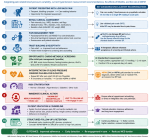
Key components of the model: the model is structured around three main steps: 1) relief of low back pain (pain assessment using the Visual Analog Scale (VAS), symptomatic treatment, and postural advice); 2) systematic screening of cardio-metabolic risk factors (blood pressure, body mass index (BMI), waist circumference, blood glucose, glycated hemoglobin (HbA1c)), taking into account medical history, ongoing treatment, and pain intensity; 3) immediate referral and re-engagement of patients into an appropriate care pathway. The conceptual framework of the LOMBA-CARDIO model is presented in Figure 1.
Data from the pilot study: a pilot study conducted at the Armed Forces Teaching Hospital - University Hospital Center (HIA-CHU) of Parakou between May 2022 and December 2024 included 283 patients presenting with low back pain. Data extracted from medical records and consultations were anonymized prior to analysis, and their use for operational research purposes was authorized by the hospital director in accordance with institutional procedures. The study aimed to assess the prevalence and associated factors of cardiovascular comorbidities (hypertension, diabetes, and obesity), while evaluating the feasibility, relevance, and acceptability of the model. All patients consulting for low back pain were included, except those with trauma or cancer. A cross-sectional analytical study, complemented by an interventional component and short-term follow-up, was conducted in the outpatient department of the Department of Medicine at HIA-CHU Parakou, Benin, from May 1st, 2022, to December 31st, 2024.
Cardio-metabolic screening was performed, followed by immediate clinical management. Patients were subsequently reassessed during scheduled visits or through follow-up calls to evaluate treatment adherence. Acceptance was defined as the proportion of patients who agreed to undergo cardio-metabolic screening during consultation. Re-engagement was defined as previously diagnosed patients who had been lost to follow-up and returned to care, while adherence was defined as attendance at follow-up visits and/or continued medication use at 6 months. Statistical analyses were performed using STATA, with a significance level set at p < 0.05.
The prevalence of hypertension was 39.2%, including 45% newly diagnosed cases. Among previously known hypertensive patients, 93.4% had no regular follow-up. Diabetes affected 6.4% of patients, while obesity was observed in 31.1%. All identified cases received immediate management, with a treatment continuation rate of 85.1% at 6 months. A subgroup analysis focusing on patients with chronic low back pain (n = 161/283) showed a prevalence of cardiovascular comorbidities of 55.3%. Cardiovascular comorbidities were defined as the presence of at least one of the following conditions: hypertension, diabetes, or obesity. In multivariable logistic regression analysis, reduced mobility (adjusted OR: 2.62; 95% CI: 1.24-5.52), perceived stress (adjusted OR: 5.15; 95% CI: 1.29-20.63), and marital status (married or widowed) (adjusted OR: 6.18; 95% CI: 1.57-24.36) were independently associated with the presence of cardiovascular comorbidities.
The pilot study data are presented to support the feasibility of the model; a full analytical report of the study will be presented in a separate publication.
Implementation perspectives: the present work adopts a hybrid approach, integrating a conceptual framework with preliminary empirical data derived from a pilot implementation. In this context, the LOMBA-CARDIO model is conceived as a progressive, pragmatic, and context-adapted strategy. It promotes integrated cardio-metabolic prevention and aims to enhance screening coverage and treatment adherence. The model appears to be low-cost, reproducible, and adaptable to resource-limited settings. It can be implemented in both community and hospital settings and integrated into national strategies for the prevention and control of non-communicable diseases.
The LOMBA-CARDIO model operates through a two-step mechanism: a capture phase, using low back pain consultations as an entry point to initiate screening and patient engagement, followed by a consolidation phase aimed at ensuring continuity of care through structured follow-up, multidisciplinary management, and integration into chronic disease care pathways. It relies on a key psychological lever: pain, particularly when disabling, increases patient receptivity and motivation to address underlying cardio-metabolic risks. The model also incorporates a dynamic, symptom-driven re-engagement mechanism, whereby recurrence or persistence of pain provides repeated opportunities to reassess cardio-metabolic status and reinforce adherence. Additionally, obesity represents a dual burden linking low back pain and cardiovascular risk, making pain relief a strong incentive for beneficial lifestyle changes. Overall, this symptom-driven approach may improve both screening uptake and long-term patient engagement.
Comparison with existing approaches: unlike conventional screening strategies, which are typically population-based or facility-driven and rely on patient initiative, the LOMBA-CARDIO model adopts a symptom-triggered approach. Existing models, such as community-based screening campaigns or integrated chronic care programs, have demonstrated effectiveness in case detection but often face challenges in ensuring sustained patient retention and adherence. In contrast, LOMBA-CARDIO leverages a highly prevalent and disabling symptom, low back pain, as a natural entry point into care. This approach aligns with opportunistic screening strategies while extending their scope by integrating immediate clinical relevance and patient motivation. By embedding screening within a consultation driven by a perceived urgent need, the model enhances both acceptability and engagement compared to traditional risk-based approaches.
Added value of the model: the LOMBA-CARDIO model offers an innovative approach to addressing the dual burden of chronic low back pain and cardiovascular comorbidities. Leveraging a highly disabling symptom, it enables more impactful management of underlying cardio-metabolic conditions while enhancing patient retention within the healthcare system. The model benefits from broad accessibility, encompassing all sexes and relevant age groups, and is anchored in one of the leading causes of disability, thereby reaching a large at-risk population.
Limitations and considerations: selection bias and social desirability bias cannot be excluded, as patients consulting for pain may be more motivated than the general population. In addition, the single-center design may limit the generalizability of the findings, and residual confounding cannot be excluded. The absence of a comparator group also limits causal inference, while the relatively short follow-up period does not allow assessment of long-term outcomes. Not all cases of low back pain are associated with cardio-metabolic comorbidities, and there is a potential risk of over-screening or inducing unnecessary anxiety if targeting is not appropriate. Furthermore, adequate training of healthcare providers is essential to ensure effective integration of screening into routine consultations without increasing workload or generating confusion. Finally, post-screening follow-up must be well organized to prevent loss to follow-up and ensure sustained and effective management. These limitations should be considered when interpreting the findings.
Implications for the health system: the LOMBA-CARDIO model could be integrated into primary healthcare and national non-communicable disease control programs as an opportunistic screening strategy based on simple interventions and referral pathways. Such integration could enhance early detection and long-term retention of at-risk patients within the cardio-metabolic care continuum, while addressing a dual burden.

The LOMBA-CARDIO model proposes an innovative and context-adapted approach to cardio-metabolic prevention by using low back pain as a lever for patient engagement. The findings of this pilot study suggest that the model is feasible and may contribute to improved screening uptake and patient engagement in care, particularly in the context of chronic low back pain, which may facilitate repeated contact with the healthcare system and enhance opportunities for re-engagement. These results should be interpreted with caution, and further studies are needed to confirm the effectiveness and scalability of the model. Overall, this approach offers a promising perspective for integrating symptom-driven strategies into cardio-metabolic prevention in resource-limited settings. This model may be particularly relevant in contexts where healthcare utilization is primarily symptom-driven.
The author declares no competing interests.
Lydwina Charelle Nougbode conceptualized and developed the LOMBA-CARDIO model and drafted and critically revised the manuscript. The author read and approved the final version of this manuscript.
The author would like to acknowledge the healthcare staff involved in patient management and data collection during the pilot phase, which informed the development of the model.
Figure 1: symptom-driven pathway for opportunistic cardio-metabolic screening and care re-engagement (LOMBA-CARDIO model)
- World Health Organization. Hypertension artérielle. 2025. Accessed 29th December, 2025.
- Olowoyo P, Okekunle AP, Asowata OJ, Atolani S, Morsy MI, Caiazzo E et al. Prevalence of hypertension in Africa in the last two decades: systematic review and meta-analysis. Cardiovasc Res. 2025 Oct 24;121(12):1815-1829. PubMed | Google Scholar
- Ministère de la Santé (MS), Direction Nationale de la Santé Publique (DNPS), Programme National de Lutte contre les Maladies non Transmissibles (PNLMNT). Rapport final de l´enquête pour la surveillance des facteurs de risque des maladies non transmissibles par l´approche STEPSwise de l´OMS, ENQUETE STEPS 2015 au Bénin. 2016. Accessed 2nd April, 2026.
- Haute Autorité de Santé. Lombalgie commune chronique. 2024.
- GBD 2021 Low Back Pain Collaborators. Global, regional, and national burden of low back pain, 1990-2020, its attributable risk factors, and projections to 2050: a systematic analysis of the Global Burden of Disease Study 2021. Lancet Rheumatol. 2023 May 22;5(6):e316-e329. PubMed | Google Scholar
- Condé K, Adjakou F, Touré M, Diallo MT, Diallo MH, Barry SD et al. Prevalence and factors associated with low back pain among outpatients at the Ignace Deen National Hospital in Conakry, Guinea: an analytical cross-sectional study. Ann Afr Med. 2025;18(2):e6048-e6057. Google Scholar
- World Health Organization (Benin). Rapprocher les services de santé essentiels des populations : plus de 9000 personnes dépistées sur l´hypertension artérielle et le diabète dans les zones défavorisées du Bénin. 2023. Accessed 13th September, 2025.
- Agence nationale de sécurité du médicament et des produits de santé (ANSM). Dossier thématique: traitement de la douleur. 2024. Accessed 13th September, 2025.
Search

This article authors
On Pubmed
On Google Scholar
Citation [Download]
Navigate this article
Similar articles in
Key words
Tables and figures
Article metrics
Recently from the PHCP