Youth-led social Accountability in sub-Saharan Africa: a multi-country assessment of engagement with ICPD25+ commitments
Lilian Maria Wambui, Faith Cheptoo Boit, Sharon Koki Maitha, Saida Kassim, Sheila Lumumba, Samuel Muhula, Yvonne Opanga, Brian Okada, George Kimathi, Timothy Abuya, Meron Negussie
Corresponding author: Lilian Maria Wambui, Institute of Capacity Development, Youth in Action, Amref Health Africa, Nairobi, Kenya 
Received: 31 Dec 2025 - Accepted: 04 Oct 2026 - Published: 11 Nov 2026
Domain: Community health,Health education,Health policy
Keywords: Youth participation, social accountability, SRHR; ICPD25+, digital advocacy, sub-Saharan Africa
Funding: This work received no specific grant from any funding agency in the public, commercial, or not-for-profit sectors.
©Lilian Maria Wambui et al. Primary Health Care Practice Journal (ISSN: 3105-7624). This is an Open Access article distributed under the terms of the Creative Commons Attribution International 4.0 License (https://creativecommons.org/licenses/by/4.0/), which permits unrestricted use, distribution, and reproduction in any medium, provided the original work is properly cited.
Cite this article: Lilian Maria Wambui et al. Youth-led social Accountability in sub-Saharan Africa: a multi-country assessment of engagement with ICPD25+ commitments. Primary Health Care Practice Journal. 2026;6:9. [doi: 10.11604/PHCP.2026.6.9.50871]
Available online at: https://www.phcp-journal.org//content/article/6/9/full
 PDF in process
Research 

Youth-led social Accountability in sub-Saharan Africa: a multi-country assessment of engagement with ICPD25+ commitments
Youth-led social Accountability in sub-Saharan Africa: a multi-country assessment of engagement with ICPD25+ commitments
Lilian Maria Wambui1,&, Faith Cheptoo Boit1, Sharon Koki Maitha1, Saida Kassim1, Sheila Lumumba1, Samuel Muhula1, Yvonne Opanga1, Brian Okada1, George Kimathi1, Timothy Abuya2, Meron Negussie3
&Corresponding author
Introduction: persistent gaps in youth participation in health governance continue to impede progress toward International Conference on Population and Development (ICPD25+) commitments, particularly in universal access to Sexual and Reproductive Health and Rights (SRHR) services and meaningful youth engagement in decision-making. The Youth Power Hub (YPH), a youth-led, digital, and community-based platform operating across 21 African countries, was established to strengthen youth-led social accountability and enhance monitoring of International Conference on Population and Development (ICPD25+) commitments. This study assessed participants’ reported experiences and perceived contributions of capacity strengthening, digital advocacy, and decentralized youth engagement to the SRHR accountability process.
Methods: descriptive cross-sectional mixed-methods study was conducted between September 2023 and December 2024. A purposively recruited online survey was completed by 347 young people engaged in Youth Power Hub (YPH) activities, networks, or digital platforms. Qualitative data were obtained through 14 purposively selected key informant interviews and six purposively selected country case narratives. Quantitative data were analyzed descriptively, while qualitative data were analyzed thematically.
Results: among survey respondents, 66% reported that social accountability training was highly effective in improving their knowledge and skills, while 62% perceived improvements in government efforts towards implementing ICPD25+ commitments. 96% reported moderate or significant improvement in access to SRHR information and services. Digital tools, including the YPH Tracker, social media campaigns, and online platforms, were reported to support access to SRHR information, monitoring of ICPD25+ commitments, youth mobilization, and engagement with decision-makers. Qualitative findings highlighted four themes: capacity strengthening and enhanced confidence in social accountability, youth engagement in decision-making and governance processes, the value of digital and hybrid accountability approaches, and contextual barriers and sustainability challenges.
Conclusion: participants perceived YPH activities as supporting youth knowledge, engagement and social accountability processes. The findings provide implementation insights regarding youth-led accountability approaches across diverse contexts, but the purposive sample, self-reported measures, and cross-sectional design preclude conclusions regarding programme effectiveness, causal contribution, scalability, or service-delivery impact. Further comparative and longitudinal evaluation is warranted.

Social accountability is defined as citizen-led mechanisms for holding duty-bearers accountable for public service delivery and has gained recognition globally as a cornerstone of democratic governance. According to the World Bank, social accountability relies fundamentally on civic engagement and complements traditional accountability mechanisms such as audits, elections, and legislative oversight. Global development agendas emphasize civic engagement as a foundational governance principle [1-3]. In sub-Saharan Africa, social accountability is increasingly used to address systemic weaknesses in health governance. However, implementation remains fragmented, under-resourced, and often poorly institutionalized. Young people, despite being the majority of the population, face contextual and political barriers to participation. These barriers are more pronounced in the sexual and reproductive health and rights (SRHR) space, where young people face stigma, digital inequity, and socio-political exclusion. According to the African Union’s Fifteenth Ordinary Session of the Assembly, community participation and decentralized health governance are central to improving health outcomes [4]. However, evidence from the region shows that despite growing interest, implementation remains fragmented and undervalued. Health systems across many African countries continue to face challenges such as supply stockouts, client mistreatment, weak grievance redress mechanisms, and diversion of resources. These challenges are compounded by limited channels for meaningful citizen participation, particularly for young people, women, and marginalized groups, who often lack structured platforms to influence or monitor policy implementation. While numerous social accountability initiatives have been piloted, from citizen report cards to public expenditure tracking and community scorecards, there remains a lack of aggregated evidence on what conditions enable or constrain the success of these efforts in the African context [5].
Research indicates that participatory mechanisms often fail when they lack political backing, are poorly localized, or are not supported by enabling legal frameworks and sustained resources. Youth remain excluded mainly from governance processes. Although many governments have established youth policies or councils, these are often tokenistic or under-resourced. In the context of sexual and reproductive health and rights (SRHR), young people, especially in rural or conflict-affected regions, face considerable barriers to accessing services and engaging in decision-making spaces [6]. Through the partnership between Y-ACT, Youth In Action, the United Nations Population Fund, East and Southern Africa Regional Office (UNFPA ESARO) and the African Youth and Adolescents Network on Population and Development (AfriYAN),the Youth Power Hub (YPH) was launched in 2020 after the ICPD25+ Nairobi Summit, as a youth-led, digital and community based regional platform to drive youth led social accountability for the International Conference on Population and Development (ICPD25+) commitments, focusing on commitments related to universal access to SRHR services and youth participation in decision-making across 21 African countries [7]. The initiative aimed to capacitate youth with the tools, networks, and platforms needed to monitor progress, engage decision-makers, and advocate for policy action. The YPH model is anchored on three pillars: Education, Engagement, and Mobilization, operationalized through a phased approach i) Launch of the multilingual digital platform, the Youth Power Tracker, and interactive chatbot in 2020; ii) Emphasis on youth co-creation of national workplans and Terms of Reference; distribution of youth-led sub-awards for localized advocacy in 2021; iii) Training of 30+ Trainers of Trainers (ToTs) in social accountability frameworks and digital tools in 2022 and; iv) Ongoing thematic digital campaigns, community mobilization, and masterclasses aligned with regional advocacy moment from 2020.
Between September 2023- December 2024, the Youth Power Hub commissioned a study titled. An Assessment of Youth -led social accountability within the East and Southern region of Africa (ESARO), to examine participants’ reported experiences of capacity strengthening, digital advocacy, and decentralized youth engagement, and their perceived contribution to youth-led social accountability processes for Sexual and Reproductive Health and Rights (SRHR) policy, service delivery, and decision-making in low-resource settings. Through capacity building, digital innovation, and community mobilization, the Youth power hub (YPH) represents a scalable model for transforming youth from passive policy recipients to active accountability agents. It also examines the contextual challenges such as funding delays, political resistance, and the digital divide that threaten the sustainability of youth-led accountability efforts. Despite growing investment in youth engagement and social accountability initiatives across Africa, limited evidence exists on how youth-led and digitally enabled accountability approaches operate across multiple countries, particularly in relation to SRHR governance and implementation of ICPD25+ commitments. Existing studies are largely country-specific and provide little understanding of the contextual factors, enabling conditions, and implementation challenges affecting sustainability and scale. These approaches were selected because existing evidence suggests that youth participation is strengthened when young people have relevant technical knowledge, access to appropriate engagement platforms, opportunities to generate and use evidence, and locally owned structures through which to engage decision-makers. The YPH model combined these elements through capacity strengthening, digital tools, and decentralized country-level advocacy.This study therefore sought to assess reported experiences and perceived contributions of capacity building, digital advocacy and decentralized youth engagement to youth-led social accountability for SRHR policy, service delivery and decision-making across the 21 countries in which the Youth Power Hub operates. This assessment is anchored on Youth Power Hub's underlying theory of change, which frames social accountability as an outcome of a staged pathway: programme interventions (capacity-building, digital tools, and decentralized youth engagement) are expected to produce short-term outputs (trained youth champions, an active digital platform, documented country-level activities), which in turn are expected to produce longer-term outcomes (an empowered youth constituency, sustained digital tracking of commitments, and stronger engagement between youth and duty-bearers), ultimately contributing to the intended impact of strengthened youth-led social accountability for ICPD25+ commitments.

Study design: a descriptive cross-sectional study design using mixed methods was used, integrating quantitative and qualitative data to assess reported experiences and perceived contributions of YPH activities to youth-led social accountability. The quantitative component comprised an online survey of young people engaged in YPH activities, while the qualitative component comprised key informant interviews and case narratives. The study assessed reported experiences and perceived contributions of YPH activities rather than the causal effects. The absence of a comparison group and cross-sectional timing produced attribution to observed differences or changes to YPH. Participants were situated within broader social, policy, and programme environments in which governments, civil society organizations, development partners, private-sector actors, and community initiatives may also have influenced reported changes. The assessment did not measure or control these concurrent influences. Findings are therefore interpreted as perceived contributions associated with respondents’ YPH engagement rather than changes attributable exclusively to YPH.
Study setting and population: the study was conducted across 21 countries in Eastern and Southern Africa where the Youth Power Hub operated. Eligible survey participants were young people who had engaged with YPH activities, networks, or digital platforms during the assessment period. The achieved survey sample comprised 347 respondents. The sample was programme-based and purposively recruited and was not designed to be nationally representative within participating countries or regionally representative of all young people.
Measures and areas of inquiry: the survey captured respondents' demographic characteristics, exposure to YPH activities, knowledge and confidence related to social accountability, engagement in SRHR policy and decision-making processes, perceived government responsiveness, perceived access to SRHR information and services, and use of YPH digital platforms and resources. Qualitative interviews and case narratives explored participants' experiences of capacity strengthening, youth engagement, digital and hybrid accountability approaches, policy engagement and implementation barriers, and sustainability. Measures are analyzed as reported experiences, perceptions, and observed patterns rather than as independent and dependent variables used to establish causal relationships.
Data resource and measurement: quantitative data were collected using a structured online youth experience survey administered to 347 young people through Youth Power Hub networks and platforms. The survey assessed demographic characteristics, engagement with Youth power hub, exposure to training and digital resources, knowledge and confidence relating to social accountability, participation in SRHR decision-making, perceived government responsiveness, and perceived access to SRHR information and services. The term ‘youth experience survey’ refers to this programme-engaged respondent survey and not to a separate qualitative survey. Qualitative data were collected through 14 key informant interviews with purposively selected youth leaders, representatives of youth-led organizations, AfriYAN chapter representatives, programme implementers, and relevant policy stakeholders. Six case narratives were purposively selected from country teams to reflect variation in implementation setting, reported achievements, and implementation challenges.
Sampling: a purposive sampling approach was used to recruit youth engaged in the Youth power hub (YPH) activities across 21 countries in Eastern and Southern Africa. Participants were identified through YPH networks, youth-led organizations, advocacy platforms, and programme activities. The final survey sample comprised 347 young people. Additionally, 14 key informant interviews were conducted with youth leaders, programme implementers, and policy stakeholders, while six case narratives were purposively selected to provide contextual insights into youth-led social accountability experiences across different countries. Given the exploratory nature of the study and the achieved sample size, survey findings are presented descriptively and triangulated with qualitative evidence from interviews and case narratives.
Sample size calculation: the original survey protocol estimated that 1,320 respondents would be required to detect a 10-percentage-point difference between two anticipated exposure groups at a 5% significance level and 80% power, after allowing for non-response and clustering by country. The sample size for comparing two independent proportions was estimated using the standard normal approximation described by Fleiss et al. [8]. However, recruitment yielded 347 completed surveys, and the anticipated exposed-versus-naïve group comparison could not be implemented consistently from the available data. The analysis was therefore restricted to descriptive summaries of the achieved programme-engaged sample. Estimates should not be interpreted as statistically representative of participating countries, the region, or all young people engaging with the Youth power hub. As per the protocol, the sample size determination considered 20% non-response and a design effect of 2.0 to account for clustering effects for youth in different countries, and the formula was used;

Data analysis: quantitative data were analyzed using Stata version 18. Descriptive statistics were used to summarize participant characteristics and survey responses. Frequencies and percentages were calculated for categorical variables, while continuous variables were summarized using appropriate measures of central tendency and dispersion. Exploratory bivariate analyses comparing urban and rural respondents were conducted using chi-square or Fisher's exact tests, as appropriate, and p-values were reported descriptively. Given the purposive sampling strategy, sample-size shortfall, and absence of clearly defined comparison groups, multivariable and causal inferential analyses were not undertaken. Qualitative data from key informant interviews and case narratives were analyzed thematically using NVivo version 12. Audio recordings were transcribed verbatim and reviewed for accuracy prior to analysis. An initial coding framework was developed deductively from the study objectives and areas of inquiry, including capacity strengthening, youth engagement, digital accountability approaches, governance participation, and implementation challenges. Additional codes were generated inductively from the data during coding. Codes were reviewed, refined, and grouped into broader categories, which were subsequently synthesized into overarching themes. Quantitative and qualitative findings were triangulated during interpretation to identify areas of convergence, complementarity, and contextual variation across participating countries. Given the exploratory nature of the assessment, thematic sufficiency rather than formal data saturation was sought. The analysis aimed to capture a diversity of experiences across countries and stakeholder groups rather than quantify the prevalence of themes.
Positionality and reflexivity of authors: the study was commissioned by the Youth Power Hub programme and included authors affiliated with organizations involved in its implementation. This created a potential risk of favorable interpretation and attribution bias. To mitigate this risk, data collection and analysis followed a predefined protocol; quantitative and qualitative evidence was triangulated, and findings were reviewed against the study's data. Findings are reported as participants’ experiences and perceptions rather than independently verified measures of programme effectiveness. Nevertheless, the implementer’s role in commissioning and conducting the assessment remains a limitation
Ethical considerations: ethical approval for this study was obtained from the Amref Health Africa Ethics and Scientific Review Committee (ESRC) (Ref: P1561/2023). A research permit was subsequently obtained from the National Commission for Science, Technology and Innovation (NACOSTI) (Ref: 718146). All participants received information about the purpose, procedures, potential risks, and benefits of the study before participation. Informed consent was documented electronically for online survey participants and verbally or in writing, as appropriate, for key informant interview participants prior to data collection. Participation was voluntary, and participants could decline to answer any question or withdraw from the study at any stage before data anonymization without penalty. Where withdrawal occurred prior to anonymization, the participant's data were removed from the study dataset and excluded from analysis. To protect privacy and confidentiality, no personally identifying information was included in analysis of datasets or study reports. Online survey data were collected through secure password-protected platforms, while interview data were collected in private virtual settings that minimized interruptions and protected participant confidentiality. Access to study data was restricted to authorized members of the research team who had signed confidentiality agreements. Electronic data were stored on password-protected systems with controlled access. Participants were informed of a designated study contact through which they could seek additional information about the study or sub
Social demographic characteristics of survey participants: a total of 347 young people completed the survey, with an average age of 28 years, with most aged 25-34 years (70.3%). The majority of the respondents had a college degree (48%) and were single (72%). The main source of SRH information appears to be social media platforms, 35%, followed by the YPH website at 23% (Table 1). Data are presented as numbers (percentages), unless otherwise indicated. Percentages may not total 100% because of rounding or missing responses. The p-values compare rural and urban respondents and were calculated using the chi-square test or Fisher’s exact test, as appropriate.
Capacity strengthening experiences and reported outcomes: capacity strengthening was a central component of the Youth power hub model. Survey data demonstrated broad exposure to training activities, including social accountability, ICPD25+ commitments, SRHR, digital advocacy, and stakeholder engagement. Among the 113 respondents who received training, 66% reported that social accountability training was highly effective in improving their knowledge and skills. Participants also reported improved understanding of ICPD25+ commitments and increased confidence using social accountability approaches in SRHR advocacy. Training covered diverse topics, including SRHR 69.9%, ICPD25+ commitments 46.0%, social accountability monitoring 44.2%, fundamentals of social accountability 30.1%, and community scorecards 24.8%. Survey respondents reported increased confidence in applying social accountability knowledge to SRHR issues, with nearly two-thirds of 64.8%, indicating they felt very comfortable using acquired knowledge and skills in advocacy and accountability processes. Qualitative findings illustrate how training extended beyond knowledge acquisition to practical skills development, including proposal writing, budget management, stakeholder engagement, and advocacy planning (Table 2). Data are presented as percentages. Participants could report more than one training topic; therefore, percentages may not total 100%. The p-values compare rural and urban respondents and were calculated using the chi-square test or Fisher’s exact test, as appropriate. ICPD25+, International conference on population and development commitments arising from the Nairobi summit; SRHR, sexual and reproductive health and rights; YPH, Youth Power Hub.
Reported participation in governance and accountability processes: participants reported meaningful engagement in governance and accountability processes. Nearly two-thirds (62%) perceived improvements in government efforts towards implementing ICPD25+ commitments. Around 68% reported being somewhat involved in decision-making processes related to SRHR policy and programming, while 21% reported being greatly involved. Areas of engagement included youth-friendly policy development (38.2%), decisions on youth-friendly services (25.2%), budget discussions (14.6%), and engagement around legislative processes (9.4%). Participants also reported perceived improvements in service delivery outcomes. Of respondents answering this item, 96% reported moderate or significant perceived improvement in access to SRHR information and services, youth empowerment to realize SRHR rights (93.9%), activities addressing gender-based violence (93.1%), and meaningful youth participation (92.8%). Country-level experiences further illustrated how youth engagement contributed to policy dialogues and accountability efforts. Youth organizations reported engaging ministries, parliamentarians, national population councils and local leaders in discussions focused on ICPD25+ implementation. These have been summarized in (Table 3). Data are presented as numbers (percentages). Denominators vary across indicators because of item non-response and the applicability of individual questions. The p-values compare rural and urban respondents and were calculated using the chi-square test or Fisher’s exact test, as appropriate. Reported changes represent participants’ perceptions and should not be interpreted as independently verified programme effects.
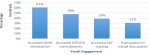
Digital tools and accountability processes: digital innovation emerged as a key enabling factor for youth-led accountability. Digital platforms, including the YPH tracker, social media campaigns, webinars and online learning platforms, enabled youth to access information, track commitments, engage decision-makers and mobilize peer networks across countries. Approximately 35% of respondents reported visiting the YPH website between two and five times, while 16% reported more than five visits. The most accessed content included SRHR resources (61%), information on country ICPD25+ commitments (48.3%), and social accountability training materials (39.3%). Participants highlighted the value of combining digital engagement with face-to-face mechanisms such as community dialogues, radio programmes and stakeholder forums. In several contexts, hybrid approaches expanded reach and addressed barriers associated with limited internet access Figure 1.
Contextual barriers and implementation challenges: despite reported achievements, participants identified several barriers affecting implementation. Four major themes emerged
Digital exclusion: limited internet access, inadequate devices, and data costs restricted participation, particularly among young people in rural areas and fragile contexts. These contributed to limited tracker use and restricted participation.
Political and institutional constraints: in some countries, social accountability activities were viewed as politically sensitive, creating challenges for engagement with government actors. Bureaucratic barriers also affected implementation and access to funding. These reduced access to policy spaces.
Limited funding: many country teams reported inadequate funding to support scale-up, geographic coverage, and sustained engagement activities. These reduce scale and coverage.
Risks of tokenistic participation: participants emphasized the need for meaningful rather than symbolic youth engagement, including stronger pathways for leadership, skills development and sustainability. These limited ownership and sustainability.
Case narrative findings: six purposively selected case narratives provided insights into how youth-led accountability processes operated across diverse country contexts. Four cases from Kenya, Mozambique, Burundi and Rwanda were selected to illustrate different pathways through which young people translated training and advocacy into action.
Kenya: community accountability for service delivery: youth advocates mobilized community members to document concerns regarding health service provision and successfully escalated these concerns to county leadership, which participants reported was followed by corrective action. This case demonstrates how social accountability skills were applied to improve accountability for local health services
Mozambique: high-level engagement on sensitive SRHR issues: youth advocates successfully engaged senior government officials to publicly discuss sensitive issues such as safe abortion through national media platforms, which was described as expanding public dialogue.
Burundi: youth diaspora engagement: digital platforms facilitated engagement of young people in the diaspora, enabling knowledge exchange and broader participation in discussions concerning ICPD25+ commitments
Rwanda: inclusion and diversity: youth advocates used social accountability approaches to promote participation among historically excluded groups, including adolescent mothers and young people with disabilities, demonstrating the potential of accountability processes to strengthen inclusion (Table 4). The table summarizes four of the six purposively selected country case narratives. The cases were selected to illustrate different pathways through which young people translated training, digital engagement, and advocacy into locally reported action. Outcomes are based on qualitative accounts from programme participants and stakeholders and were not independently verified or intended to represent all Youth Power Hub countries.
Qualitative findings: thematic analysis of key informant interviews and case narratives identified four interrelated themes: i) capacity strengthening and enhanced confidence in social accountability; ii) youth engagement in decision-making and governance processes; iii) the value of digital and hybrid accountability approaches; and iv) contextual barriers and sustainability challenges. These themes reflect commonly reported experiences across participants from different countries and stakeholder groups. The themes are presented to illustrate the range and diversity of perspectives captured during the assessment and should not be interpreted as representing the frequency or prevalence of experiences across all respondents.
Theme 1: capacity strengthening and enhanced confidence in social accountability: participants consistently described how Youth Power Hub capacity-building activities enhanced their understanding of social accountability, strengthened technical and leadership competencies, and increased confidence to engage with SRHR and governance issues. Beyond acquiring knowledge of ICPD25+ commitments and social accountability principles, young people reported gaining practical skills in proposal development, advocacy planning, stakeholder engagement, project management, financial accountability, and implementation oversight. These skills enabled participants to move from passive recipients of information to active contributors in accountability processes. Survey findings corroborated these experiences, with 66% of respondents reporting improved understanding of social accountability and 65% indicating confidence in applying social accountability knowledge to SRHR issues Several participants attributed their increased ability to engage duty-bearers and influence community-level discussions to the training received through YPH. “For Comoros, in terms of social accountability and engagement, we have worked with Amref. We have learnt a lot, especially about citizen engagement, by involving young people.” (Youth leader, Comoros) "The trainings helped impact knowledge through the social accountability toolkit and tracker... we were taught to come up with proposals and entrusted with funds and reporting responsibilities." (Youth champion, Uganda)
Theme 2: Youth engagement in decision making and governance processes: participants described increased opportunities to engage in governance and accountability structures at community, national, and regional levels. These opportunities included participation in consultations, policy dialogues, stakeholder forums, technical working groups, legislative discussions, and community oversight processes. Respondents viewed social accountability as a mechanism through which young people could demand transparency, monitor government commitments, and influence SRHR-related decision-making. Survey findings similarly indicated that 68% of respondents reported being somewhat involved in decision-making processes and 62% perceived improvement in government responsiveness towards ICPD25+ commitments.
Many participants highlighted that engagement had expanded beyond awareness creation and enabled direct interaction with policymakers, government actors, and service providers. Some reported experiences where youth-led advocacy contributed to increased attention to youth priorities, policy discussions, and accountability demands. This theme demonstrates that participants perceived social accountability as creating pathways for meaningful youth participation in governance processes rather than merely providing information or awareness-raising activities. “We have seen young people moving forward; they’re holding our leaders accountable in our respective districts. We have seen that things are beginning to be implemented as committed, for example, Zimbabwe is really committed to health; for instance, the school health policy that ensures young people in school have access to comprehensive sexuality education so as to reduce teenage pregnancies, etc.” (Youth champion, Zimbabwe)
Theme 3: value of digital and hybrid accountability approaches: participants consistently emphasized the importance of digital tools in facilitating youth engagement across geographically dispersed contexts. Social media platforms, digital campaigns, webinars, online learning platforms, and the Youth Power Tracker were described as important mechanisms for disseminating information, supporting advocacy efforts, monitoring ICPD25+ commitments, and connecting youth networks across countries. However, participants also stressed that digital approaches alone were insufficient. Instead, successful implementation depended on combining online platforms with offline engagement mechanisms such as community dialogues, radio programmes, television outreach, and face-to-face mobilization. Youth described hybrid approaches as particularly valuable in expanding participation and reaching populations that might otherwise be excluded due to digital inequities. These approaches also strengthened trust between communities, youth advocates, and decision-makers by creating opportunities for direct interaction while retaining the scalability of digital platforms.The findings therefore suggest that hybrid accountability approaches were perceived as more inclusive and contextually responsive than purely digital interventions, particularly in settings characterized by uneven internet access and varying levels of digital literacy. “We use a lot of social media on our end. One of the tools that we use is social media. We use every single platform. But when you mentioned TikTok, it reminded me we did a campaign here, in Youth Power Hub, like the entire region. We did a campaign in 2022 around Sixteen Days of activism. So, each country should use their language. And we did that together with the initiative team. And one of the videos went viral. Even the Ministry of Gender and Family Promotion had to repost it. And I remember sharing this with the entire Youth Power Hub, where they were like, " We need youth who come in in a meaningful way. The Impanuro Girls Initiative, we're doing that. Even with the interface, the gender monitoring office had to repost, and, you know, they told us, you are doing really great. So, I'll say we use social media as well, a lot of it.”(Programme Implementer, Rwanda)
Theme 4: contextual barriers and sustainability challenges despite reported successes, participants described several challenges limiting the effectiveness and sustainability of youth-led social accountability initiatives. Four interrelated barriers emerged. First, participants highlighted political resistance and the politicization of youth activism. In several countries, accountability activities were perceived as political actions, which limited safe engagement and access to decision-making spaces. Second, participants described risks of tokenistic youth participation, where young people were invited into governance processes without meaningful authority, mentorship, or institutional support. Third, digital exclusion constrained participation among rural and marginalized populations due to limited access to internet connectivity and digital infrastructure. Finally, participants reported persistent resource constraints, including inadequate funding and implementation challenges that affected continuity and scale. A participant from the region described how political and operational challenges affected continued engagement: “In 2020, we were very active in some activities of social accountability, but after that year, in the beginning of 2021 until now, we did not participate. Because there was no financial support received, given some difficulty with the administration of the Youth Power Hub, and due to the political climate.” (Programme implementer, Kenya). Overall, these findings suggest that while youth-led accountability approaches are viewed positively, sustained impact depends on adequate resourcing, enabling political environments, inclusive participation structures, and investments in both digital and non-digital engagement mechanisms.
The findings of this study demonstrate that the Youth Power Hub (YPH) model, grounded in youth capacity strengthening, digital innovation, and localized advocacy, was perceived by participants as supporting youth-led accountability for SRHR in diverse African contexts. These results are consistent with emerging evidence across Sub-Saharan Africa showing that youth-led social accountability can improve service responsiveness, strengthen youth engagement, and contribute to better SRHR outcomes [9]. Recent studies reinforce the potential and reported contributions of youth-led accountability approaches. For example, a 2024 study in Kilifi County, Kenya found that youth-led social accountability mechanisms, including community scorecards and youth-generated feedback, resulted in improved responsiveness of SRHR service providers and enhanced youth-friendly services [10]. Similarly, the study highlighted the role of youth-generated evidence in prompting corrective actions by duty-bearers. Additionally, a 2024 scoping review of SRHR interventions in sub-Saharan Africa found that multi-component interventions, particularly those combining community engagement, peer mobilization, and digital or mHealth strategies, consistently improved outcomes such as contraceptive uptake, SRHR knowledge, and health-seeking behavior among young people. YPH’s combination of digital tracking tools and community-led advocacy aligns with these evidence-based approaches [11].
Systematic reviews of barriers to youth-friendly SRHR services provide further context for our findings. Negative provider attitudes, stigma, lack of privacy, and inadequate youth-friendly services remain major barriers to SRHR access across the region [11]. By equipping youth with the skills, tools, and platforms to monitor commitments and engage with duty-bearers, Findings suggest that participants perceived YPH activities as helping address some of these challenges. Youth in this study reported increased confidence engaging with health systems, reflecting evidence from participatory action research in Senegal, where youth involvement significantly increased agency, leadership, and problem-solving capacity around SRHR issues [12]. At policy and governance levels, the literature highlights persistent gaps between youth-centered policy frameworks and actual youth engagement in decision-making. For example, ethnographic work in Malawi demonstrates that despite progressive SRHR policies, youth participation is often symbolic or constrained by political, social, and institutional barriers [13]. Youth power hub study findings suggest that YPH’s structured model, particularly its youth co-creation of national plans, youth-led advocacy coalitions, and formalized engagement with regional bodies, may offer mechanisms for addressing this policy-to-practice gap by strengthening institutional pathways for youth accountability.
Participants reported improvements associated with their engagement in YPH activities. A November 2023 regional study across Ethiopia, Kenya, and Uganda reported that social accountability capacity-building for youth-led CSOs significantly strengthened youth participation in governance spaces and improved collaboration with government agencies [14]. These enablers, i.e. capacity building, contextualized tools, and multi-stakeholder partnerships, mirror the drivers of success observed in our study. However, the challenges identified in this study, including digital exclusion, fragmented funding flows, political resistance, and risks of tokenism, mirror constraints were also noted in other African contexts. These challenges highlight the continued need for sustainable financing, adaptive advocacy strategies, and legally mandated youth participation mechanisms to strengthen the resilience of youth-led social accountability efforts. Overall, integrating findings from regional and global evidence with the YPH study results suggests that youth-led social accountability is both feasible to implement and viewed positively by participants when supported through structured capacity building, digital tools, and strong partnerships. The YPH model contributes valuable multi-country evidence on hybrid digital-community accountability approaches that can inform wider regional efforts to institutionalize youth participation in SRHR governance.
This study had several limitations. First, the use of purposive sampling may have introduced self-selection bias, as youth already engaged in YPH activities were more likely to participate, potentially limiting representation of marginalized or disengaged youth. Second, differences in implementation of maturity across the 21 countries mean that findings may not be uniformly comparable, with more favorable reported experiences more likely in countries with established youth networks. Third, the study relied on self-reported data, which may be influenced by social desirability bias. Fourth, digital components of the model, such as the YPH Tracker, were not equally accessible in all regions due to digital inequities, potentially limiting participation for youth in low-connectivity settings. Fifth, because the design was cross-sectional and lacked a comparison group, findings cannot establish causality or attribute observed changes solely to YPH activities. Additionally, the survey did not collect information on participant gender/sex and duration of engagement with the Youth Power Hub. Consequently, the study was unable to assess whether reported experiences differed by gender or level of programme exposure. Finally, the relatively short assessment period limits the ability to draw conclusions about long-term sustainability or policy impact. Despite these limitations, triangulation across surveys, interviews, and case narratives strengthens confidence in the study’s findings.
This study's findings provide multi-country evidence on the reported experiences of young people participating in the Youth Power Hub. Participants generally viewed capacity strengthening, digital platforms, and locally led engagement as useful for building knowledge, supporting mobilization, tracking commitments, and creating opportunities to engage decisionmakers on SRHR issues. The findings also highlight persistent constraints, including digital exclusion, limited financing, political and institutional barriers, and risks of tokenistic participation. These findings suggest that hybrid digital and community-based approaches warrant further development and prospective evaluation. However, the purposive sample, sample-size shortfall, cross-sectional design, reliance on self-reported perceptions, and absence of a comparison group mean that the study cannot establish programme effectiveness, causal contribution, scalability, or changes in service delivery. Future evaluations should use adequately powered comparative or longitudinal designs and incorporate independently verified governance and service-delivery measures.
What is known about this topic
- Youth-led social accountability has been shown to improve responsiveness of health systems, including in SRHR contexts, through mechanisms such as community scorecards, youth feedback platforms, and paticipatory monitoring across several African countries; previous studies show these approaches can prompt corrective action, improve youth-friendly service delivery, and enhance engagement between youth and duty-bearers;
- Barriers such as stigma, political exclusion, limited digital access, and weak youth-friendly services persist across sub-Saharan Africa, restricting meaningful youth participation in SRHR governance; evidence consistently highlights gaps between policy commitments and actual inclusion of youth in decision-making processes.
What this study adds
- This study describes reported experiences of youth participating in a social accountability initiative operating across 21 African countries and highlights how programme-engaged youth perceived capacity strengthening, digital tools, and decentralized advocacy;
- The findings identify implementation lessons concerning hybrid digital and community engagement, as well as contextual barriers related to connectivity, financing, political environments, and meaningful youth participation;
- The assessment demonstrates the feasibility of collecting multi-country descriptive evidence through a regional youth network, while also highlighting the need for comparative, longitudinal, and independently verified evaluation of programme outcomes.
The authors declare no competing interests.
Timothy Abuya, Faith Cheptoo Boit, Lilian Maria Wambui, Sharon Koki Maitha, Meron Negussie, George Kimathi, Muhula and Brian Okada: have been equally involved in the study from conception, design, acquisition of data, analysis and interpretation of data, and drafting the article. Saida Kassim and Sheila Lumumba: have been involved in the review of this article. All authors have read and a greed to the final manuscript.
The authors acknowledge and appreciate the support of Amref Health Africa, Y-ACT leadership, UNFPA ESARO, partner organizations and Youth Power Hub youth leaders for their contributions and support.
Table 1: sociodemographic characteristics and principal sources of SRHR among 347 young people engaged in Youth power hub activities, networks or digital platforms
Table 2: content of social accountability training reported by 113 Youth power hub participants who received training
Table 3: participants’ perceived changes in SRHR services, involvement in decision-making, areas of participation and confidence in applying social accountability knowledge among 347 young people
Table 4: illustrative pathways and reported outcomes of youth-led social accountability activities in four purposively selected country case narratives
Figure 1: proportion of 347 young people engaged in the YPH who reported accessing SRHR information, ICPD25+ commitment information and social accountability training materials, or participating in virtual discussions through digital accountability platforms
- United Nation. THE 17 GOALS .UN. Accessed December 10, 2025.
- Development Assistance Committee.The Paris declaration on aid effectiveness and the Accra Agenda for action. DAC. Paris, France:OECD. 2005.
- Fox JA. Social accountability: what does the evidence really say?. World development. 2015 Aug 1;72:346-61. Google Scholar
- African Union. Assembly of the African Union, Fifteenth Ordinary Session: 25 – 27 July 2010, Kampala, Uganda. AU. Accessed December 10, 2025.
- Malena C. Social Accountability. IECS. 2022; 1-8.
- Mbeba RM, Mkuye MS, Magembe GE, Yotham WL, Mellah AO, Mkuwa SB. Barriers to sexual reproductive health services and rights among young people in Mtwara district, Tanzania: a qualitative study. Pan Afr Med J. 2012;13 Suppl 1(Suppl 1):13. PubMed | Google Scholar
- United Nation Population Funds. Accelerating the Promise: The report on the Nairobi Summit on ICPD25. UNFPA. Accessed December 10, 2025.
- Fleiss JL, Levin B, Paik MC. Statistical methods for rates and proportions. John Wiley & Sons; 2013 Jun 12. Google Scholar
- Chipako I, Singhal S, Hollingsworth B. Impact of sexual and reproductive health interventions among young people in sub-Saharan Africa: a scoping review. Front Glob Womens Health. 2024 Apr 18:5:1344135. PubMed | Google Scholar
- Kihara AB, Wanjiku SE, Obara S . Youth-led social accountability among service providers optimizing sexual and reproductive health rights outcomes in Kilifi County, Kenya. J Obstet Gynaecol East Cent Africa. 2024 Feb 16;36(1). Google Scholar
- Ninsiima LR, Chiumia IK, Ndejjo R. Factors influencing access to and utilisation of youth-friendly sexual and reproductive health services in sub-Saharan Africa: a systematic review. Reprod Health. 2021 Jun 27;18(1):135. PubMed | Google Scholar
- Fortin G, Vandermorris A, Sall M, McKinnon B. Evaluation of a youth-led participatory action research to address adolescent sexual and reproductive health and rights issues in Senegal. Glob Public Health. 2022 Nov;17(11):2977-2990. PubMed | Google Scholar
- Wigle J, Paul S, Birn AE, Gladstone B, Braitstein P. Youth participation in sexual and reproductive health: policy, practice, and progress in Malawi. Int J Public Health. 2020 May;65(4):379-389. PubMed | Google Scholar
- Tesfaye A, Gatellier K. Strengthening social accountability for meaningful youth engagement in Africa. Google Scholar
Search

This article authors
On Pubmed
On Google Scholar
Citation [Download]
Navigate this article
Similar articles in
Key words
Tables and figures

Article metrics
Recently from the PHCP