Cholera re-emergence in Sudan: basic public health must not wait for peace
Reem Esam Siddig, Afaf Mohammed Hammad, Hiba Abdelgader Mohammed Elzain
Corresponding author: Reem Esam Siddig, Faculty of Dentistry, University of Medical Sciences and Technology (UMST), Khartoum, Sudan 
Received: 20 Aug 2026 - Accepted: 14 Oct 2026 - Published: 22 Oct 2026
Domain: Epidemiology, Health emergencies, Public health emergencies, Community health
Keywords: Cholera, Sudan, public health emergency, primary healthcare
Funding: This work received no specific grant from any funding agency in the public, commercial, or not-for-profit sectors.
©Reem Esam Siddig et al. Primary Health Care Practice Journal (ISSN: 3105-7624). This is an Open Access article distributed under the terms of the Creative Commons Attribution International 4.0 License (https://creativecommons.org/licenses/by/4.0/), which permits unrestricted use, distribution, and reproduction in any medium, provided the original work is properly cited.
Cite this article: Reem Esam Siddig et al. Cholera re-emergence in Sudan: basic public health must not wait for peace. Primary Health Care Practice Journal. 2026;6:5. [doi: 10.11604/PHCP.2026.6.5.55010]
Available online at: https://www.phcp-journal.org//content/article/6/5/full
 PDF in process
Letter to the editors 

Cholera re-emergence in Sudan: basic public health must not wait for peace
Cholera re-emergence in Sudan: basic public health must not wait for peace
 Reem Esam Siddig1,2,&, Afaf Mohammed Hammad3, Hiba Abdelgader Mohammed Elzain4,5
&Corresponding author

Since the conflict began in Sudan on April 15, 2023, over 59,000 lives have been lost, resulting in the world's largest humanitarian crisis, with more than 33 million people in need and approximately 21 million requiring health services [1]. Cholera has re-emerged in Sudan, impacting several states, particularly in the western region of the country. This year, the outbreak started on May 13 as Acute Watery Diarrhoea (AWD) and was officially confirmed as cholera by the Federal Ministry of Health on June 23, 2026 [2].
In July 2026, Sudan experienced a cholera outbreak with more than 1,330 confirmed cases and 114 associated deaths, corresponding to a case fatality rate (CFR) of 13.7% [3]. According to the latest available World Health Organization (WHO) Weekly Epidemiological Record, Sudan reported 845 new cholera cases and 77 associated deaths during the surveillance period covered by that issue, yielding a CFR of 9.1% [4].
Health-service disruption, and shortages of essential medical supplies constrain access to care and undermine case detection, surveillance at secondary and tertiary levels. These upstream failures are overwhelming the frontline primary clinics and eroding the capacity of local healthcare workers. Consequently, the very primary healthcare functions that limit transmission are compromised [5]. The situation is expected to deteriorate further with the onset of the upcoming rainy season as flooding can compromise access to safe water, sanitation and hygiene [6].
According to the United Nations report, as of 20th May, 2026, coordinated cholera treatment, prevention, and control activities were underway at the Foga Cholera Treatment Centre (CTC) and its affiliated Cholera Treatment Units (CTUs) in Elregieg, Wad Banda, and Al Fula. These interventions formed an integral component of the comprehensive response and were supported by rapid response teams (RRTs) deployed across the affected localities [1].
The 2026 reduction in reported cholera cases in Sudan (Figure 1) is likely attributable to outbreak containment, large scale oral cholera vaccination (>23 million doses), and reinforced surveillance, community based Water, Sanitation, and Hygiene (WASH), and case management. Sustaining these gains should be integrated into national health system recovery and preparedness planning [7].
These efforts are sustained through support from the Federal Ministry of Health, State Ministries of Health, the Sudan Health Cluster, the World Health Organization (WHO) and its Eastern Mediterranean office (WHO EMRO). Furthermore, the United Nations agencies and humanitarian partners [8].
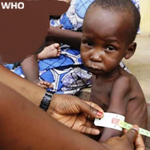
El-Obeid, the capital of North Kordofan State, remains an active conflict zone, hosting approximately 100,000 internally displaced persons in addition to its population of 500,000 [8]. It's now mostly affected, as the water situation is critical, and hospitals lack reliable backup power. This puts lifesaving services at risk of shutting down. Access to medicines continues to be a major challenge. Insecurity and rising transportation costs further complicate patient referrals [9]. Approximately 4.2 million people in Sudan are expected to experience acute malnutrition, including more than 825,000 children with severe acute malnutrition, which increases their vulnerability to infectious diseases [4].
The Sudanese conflicting parties must cease attacks on civilians. At the same time, international donors and humanitarian agencies in Sudan need to urgently increase their financial support. Collaboration is essential to manage the cholera outbreak, particularly in areas affected by conflict, displacement, flooding, and inadequate healthcare access. Safe humanitarian access allows for the delivery of clean water, sanitation, hygiene supplies, and shelter. Moreover, facilitates cholera surveillance, treatment, and vaccinations, as well as provides medical and psychological care for victims of sexual violence [10].
The authors declare no competing interests.

All the authors read and approved the final version of this manuscript.
Figure 1: reported cholera cases and deaths in Sudan, August 2023-July 2026
- United Nations. New cholera outbreak alert for Sudan's war-weary communities. 2026. Accessed 17th August, 2026.
- Alight Sudan - Cholera Outbreak, West Kordofan State, Sudan (1st - 29th July 2026). 2026. Accessed 17th August, 2026.
- United Nations Audiovisual Library. Geneva/Sudan cholera alert. 2026. Accessed 18th August, 2026.
- World Health Organization. WHO Situation Report Health emergencies in the Eastern Mediterranean Region. 2026. Accessed 5th October, 2026.
- World Health Organization. Multi-country outbreak of cholera: epidemiological update 38. 2026.
- Africanews. WHO warns Sudan's cholera outbreak may worsen amid conflict and rains. 2026. Accessed 5th October, 2026.
- World Health Organization Regional Office for the Eastern Mediterranean. Sudan declares an end to its cholera outbreak. 2026. Accessed 5th October, 2026.
- World Health Organization. Sudan Health Spotlight August 2026 . 2026. Accessed 7th October, 2026.
- Médecins Sans Frontières. Half a million people in El-Obeid face limited services as drone attacks intensify. 2026. Accessed 18th August, 2026.
- Médecins Sans Frontières. In Focus: Conflict in Sudan. 2026. Accessed 18th August, 2026.
Search

This article authors
On Pubmed
On Google Scholar
Citation [Download]
Navigate this article
Similar articles in
Key words
Tables and figures

Article metrics
Recently from the PHCP